


Surya Grahan: A Vedic Perspective on the Solar Eclipse
12 Aug 2025 • 1 min read

Agnivesh, Vedic Researcher
Author

 7196
7196 7196
7196
Surya Grahan: Unveiling the Cosmic Wisdom of the Solar Eclipse
As the moon casts its shadow upon the Earth, obscuring the life-giving Sun, the world witnesses the grand spectacle of a solar eclipse. While modern science explains this as a precise alignment of celestial bodies, the ancient Vedic scriptures of India offer a deeper, more profound perspective. For the Rishis and seers, a 'Grahan' was not merely an astronomical event but a powerful moment in the cosmic cycle, ripe with spiritual potential.
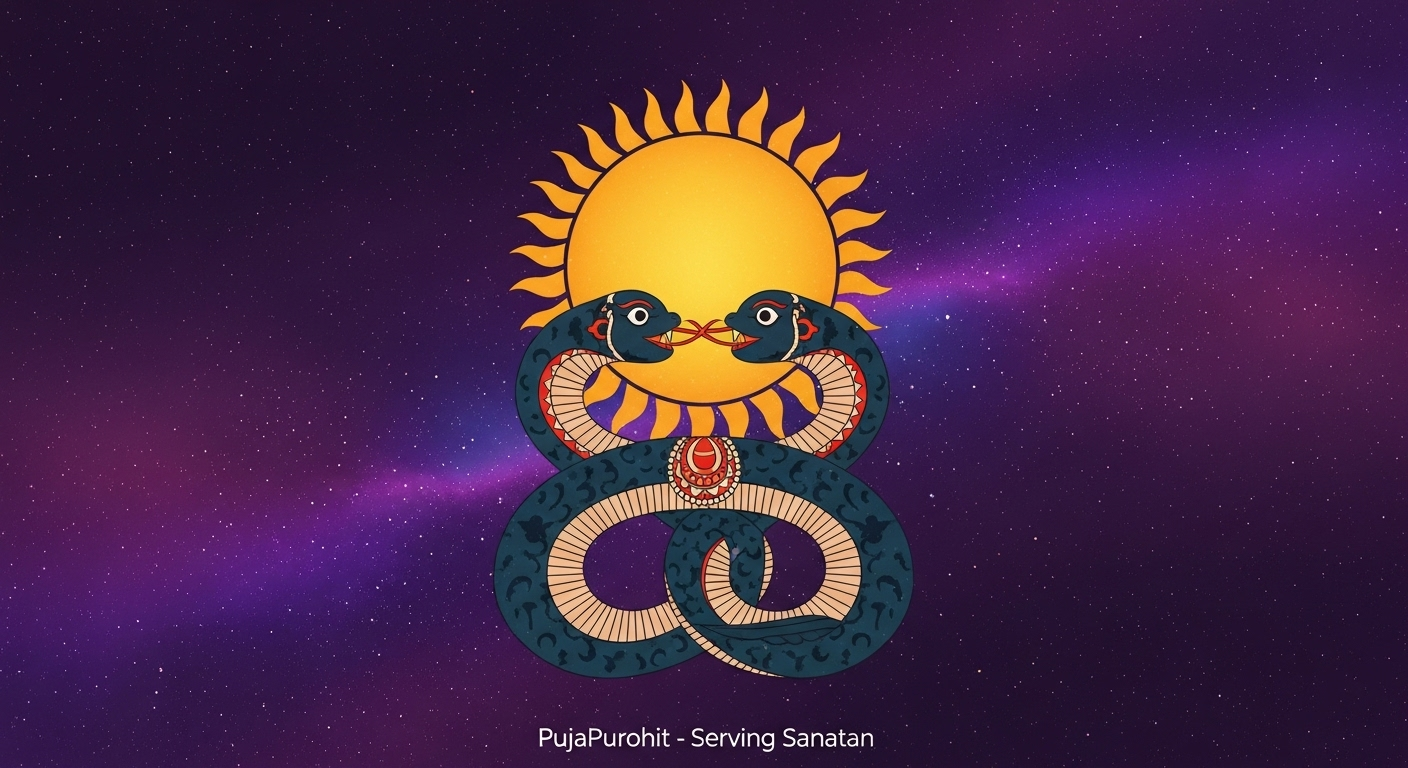
The Celestial Drama: Rahu, Ketu, and the Sun God
In Vedic lore, the eclipse is explained through the dramatic tale from the Puranas concerning the 'Samudra Manthan' (the churning of the cosmic ocean). When the nectar of immortality (Amrita) emerged, the demon Svarbhanu disguised himself as a Deva to drink it. The Sun (Surya) and Moon (Chandra) gods noticed this deception and alerted Lord Vishnu, who swiftly decapitated the demon with his Sudarshana Chakra. However, having consumed the nectar, the head and body became immortal, persisting as the celestial entities Rahu (the head) and Ketu (the body). To avenge this, Rahu periodically 'swallows' the Sun, causing a Surya Grahan, plunging the world into a temporary, unnatural darkness.
Why is an Eclipse Considered Inauspicious?
From a Vedic standpoint, the Sun is the source of 'Prana' (life force energy). During an eclipse, this energy is believed to be disturbed and contaminated by the malefic influence of Rahu. This disruption is considered inauspicious for material activities. The atmosphere is thought to be charged with subtle, negative energies, making it an unsuitable time for activities like cooking, eating, or starting new ventures. It is a time when the forces of darkness gain temporary ascendancy over light.
Recommended Practices (Sadhana) During a Grahan
Instead of a time for fear, the Vedic tradition views the eclipse as a potent period for spiritual practices (Sadhana), as the effects of mantras and meditation are said to be multiplied manifold. Here are the recommended activities:
- Mantra Japa: Chanting mantras is the most highly recommended practice. The Gayatri Mantra, Mahamrityunjaya Mantra, or specific Surya (Sun) and Rahu mantras are particularly powerful.
- Meditation (Dhyana): The period of darkness is an invitation to turn the focus inward, away from the material world. Meditating on the inner light or one's Ishta Devata (chosen deity) is highly beneficial.
- Fasting (Upavasa): It is advised to abstain from food and water during the eclipse period to avoid consuming the disturbed energies. This also aids in keeping the body light for spiritual practices.
- Donation (Daan): Making charitable donations after the eclipse concludes is believed to mitigate the negative effects and earn spiritual merit.
- Ritual Bath (Snana): A bath is recommended both before and after the eclipse. The final bath signifies a cleansing of any residual negative energies from the Grahan period.

Frequently Asked Questions (FAQ)
- Q: What is the 'Sutak Kaal'?
- A: The Sutak is the inauspicious period that begins several hours before the actual eclipse. During this time, temples are closed, and activities like cooking and eating are avoided to prepare the mind and body for the main event.
- Q: Is it really harmful to eat food prepared during an eclipse?
- A: From a spiritual and subtle energy perspective, Vedic wisdom states that the food becomes energetically contaminated (tamasic). While modern science may not validate this, it is a core principle for those following the tradition, aimed at maintaining spiritual purity.
- Q: Can I watch the eclipse?
- A: While modern science permits viewing with certified protective glasses, the Vedic tradition advises against it. The focus is not on the external spectacle but on the internal spiritual opportunity. The Rishis encouraged using this time to 'see' the inner self, not the obscured Sun.
In conclusion, the Surya Grahan is a profound reminder of the intricate dance of cosmic forces. It calls us to pause our worldly pursuits, turn our gaze inward, and connect with the timeless consciousness that pervades all existence. It is not an omen of doom, but a divine appointment for introspection and spiritual elevation. #SuryaGrahan #VedicWisdom #SolarEclipse #Jyotisha #Spirituality #RahuKetu #AncientScience

भगवान शिव को क्यों कहा जाता है नीलकंठ? जानिए कारण
जाने भगवान शिव को क्यों कहा जाता है नीलकंठ, कैसे पड़ा महादेव का यह नाम, यहां पढ़े

Why Is the Maha Kumbh 2025 the Most Special Event in 144 Years?
Maha Kumbh 2025, why 2025 maha kumbh special read why this thithi is so special so it came after 144 years

Durga Puja 2026: Navratri Dates, Ghatasthapana Muhurat, Day-Wise Puja & Sandhi Puja Timing
Durga Puja & Sharad Navratri 2026 complete guide — Ghatasthapana muhurat, day-wise Navratri calendar, Shashthi to Vijayadashami schedule, Sandhi Puja timing, Kanya Pujan, samagri list & vidhi. Book a verified Pandit for Durga Puja, Kalash Sthapana & Navratri Puja at home in Delhi NCR, Mumbai, Kolkata, Bangalore, Pune & 50+ cities.
Pitru Paksha 2025: Why We Observe It, Rituals, Dates, and Book a Pandit with pujaPurohit
A comprehensive guide to Pitru Paksha 2025 (September 7 - September 21). Understand its significance, key rituals like Tarpan and Pindadan, important dates, and how to book an experienced pandit for an authentic Shraddha puja at home with pujaPurohit.
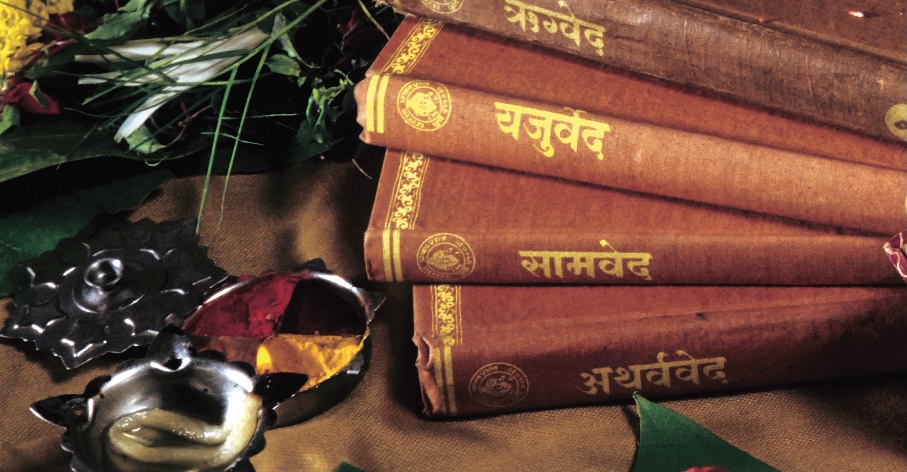
Essence of Hindu scriptures, know what is in which scripture
Rig Veda is the earliest of the four Vedas. It is a large collection of hymns in praise of the gods, which are chanted in various rituals.
Your spiritual need,
just a tap away.

Your spiritual need,
just a tap away.